
HAWAII VOLCANOES NATIONAL PARK, Hawaii — Kilauea is putting on another dramatic display of volcanic power as its 54th eruption episode gets underway at the summit of one of Hawaii’s most active volcanoes.
According to the U.S. Geological Survey’s Hawaiian Volcano Observatory, lava fountaining began at approximately 10:30 a.m. HST Tuesday, August 25, inside Halemaʻumaʻu crater.
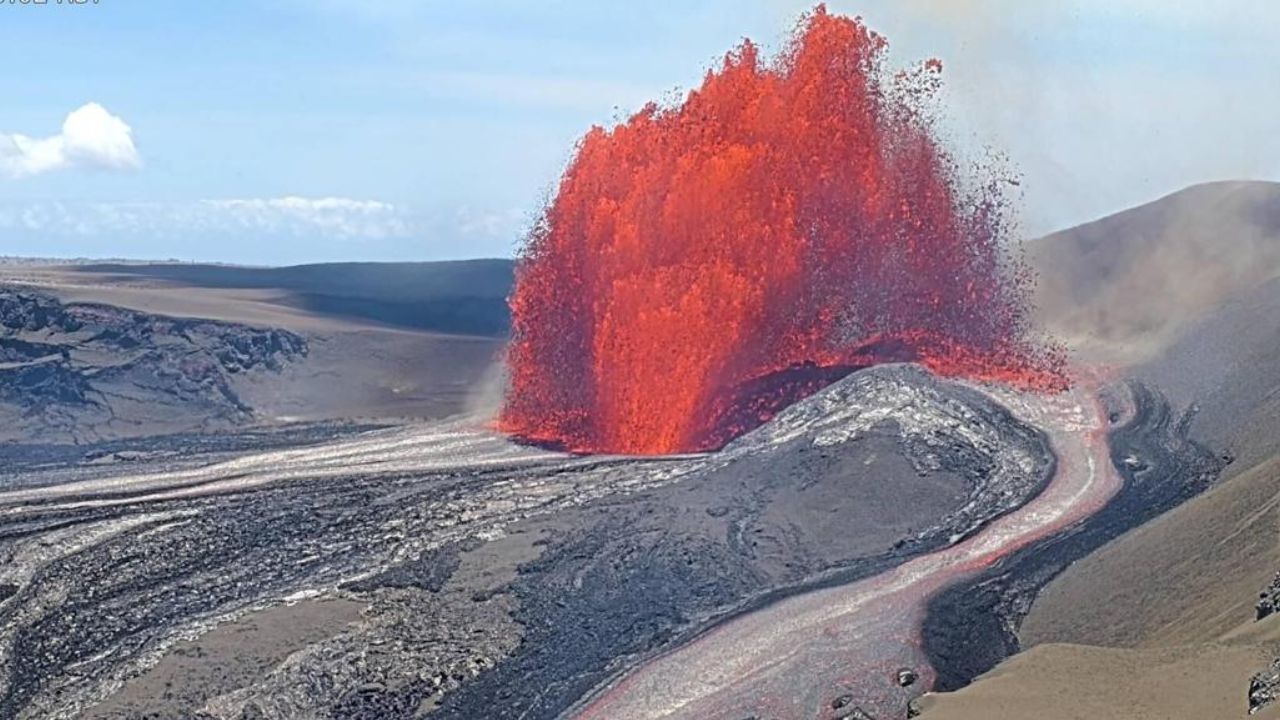
The eruption initially produced lava fountains around 50 to 75 feet high, but the activity intensified rapidly. Within about two hours, the north vent fountain had reached approximately 500 feet above ground level, while the volcanic plume climbed to roughly 17,000 feet above sea level.
USGS footage and photographs captured the spectacular eruption as molten lava surged upward from the north vent before cascading back down into the crater.
Lava Fountains Surge Toward 500 Feet
The early stages of the 54th episode showed lava activity steadily increasing.
Before the main eruption began, weak spattering had started the previous day, becoming more continuous overnight. Overflows from the north vent began after 6 a.m. Tuesday, followed by continuous low-level fountaining around 9 a.m.
When the official episode began at 10:30 a.m., fountains were between 50 and 75 feet high. Scientists expected the fountains to increase rapidly, and that prediction was soon realized.
By around 12:30 p.m. HST, the north vent fountain had reached approximately 500 feet, according to USGS observations.
The eruption also generated lava flows across the floor of Halemaʻumaʻu crater, although all eruptive vents and lava flows remained confined within the crater at the time of the latest official update.
Ash and Pele’s Hair Could Reach Communities
While the spectacular lava fountains are confined to the summit crater, volcanic material carried by the wind could affect areas farther away.
USGS officials said winds near the eruptive vents were blowing from the northeast, meaning volcanic gas and material could be carried toward the southwest.
The eruption is expected to produce moderate amounts of tephra, with larger pieces generally falling closer to the vents. Fine ash and delicate volcanic strands known as Pele’s hair can remain suspended and travel farther downwind.
Officials said ash and Pele’s hair could affect Pāhala and other communities in the Kaʻu area.
The greatest tephra fall is expected within roughly 3 miles of the eruptive vents, while lighter material can travel much farther depending on wind conditions.
Kilauea Continues Its Episodic Eruptions
The latest eruption is part of a continuing pattern of episodic activity at Kilauea’s summit. The volcano has been erupting intermittently from vents in Halemaʻumaʻu since December 23, 2024, with lava-fountaining episodes generally lasting less than 12 hours and separated by pauses of at least several days or weeks.
The previous episode, Episode 53, began August 12 and ended abruptly in the early hours of August 13 after about 9.6 hours of continuous fountaining. Its north vent also reached approximately 500 feet, while its plume rose above 18,000 feet.
The rapid return of lava fountains has kept scientists closely watching Kilauea’s summit for changes in eruptive behavior.
Officials Continue Monitoring Hawaii Volcano
The U.S. Geological Survey continues to monitor Kilauea through webcams, ground sensors, field observations and other instruments as Episode 54 develops.
The current volcano alert level is WATCH, while the aviation color code is ORANGE, according to the latest Hawaiian Volcano Observatory notice.
For now, the active lava remains inside Halemaʻumaʻu crater, but officials are closely tracking volcanic gases, ash, tephra and changing wind conditions.
The fiery display may be dramatic for visitors watching from designated areas of Hawaiʻi Volcanoes National Park, but scientists continue to emphasize that volcanic activity can change quickly.
As Kilauea’s 54th episode unfolds, authorities will continue watching the volcano for any changes that could affect the surrounding area.
What do you think about Kilauea’s latest fiery display? Would you want to see the 500-foot lava fountains in person? Share your thoughts in the comments.
2 thoughts on “Hawaii’s Kilauea Roars Back to Life With 54th Eruption Episode as Towering Lava Fountains Light Up the Summit”