
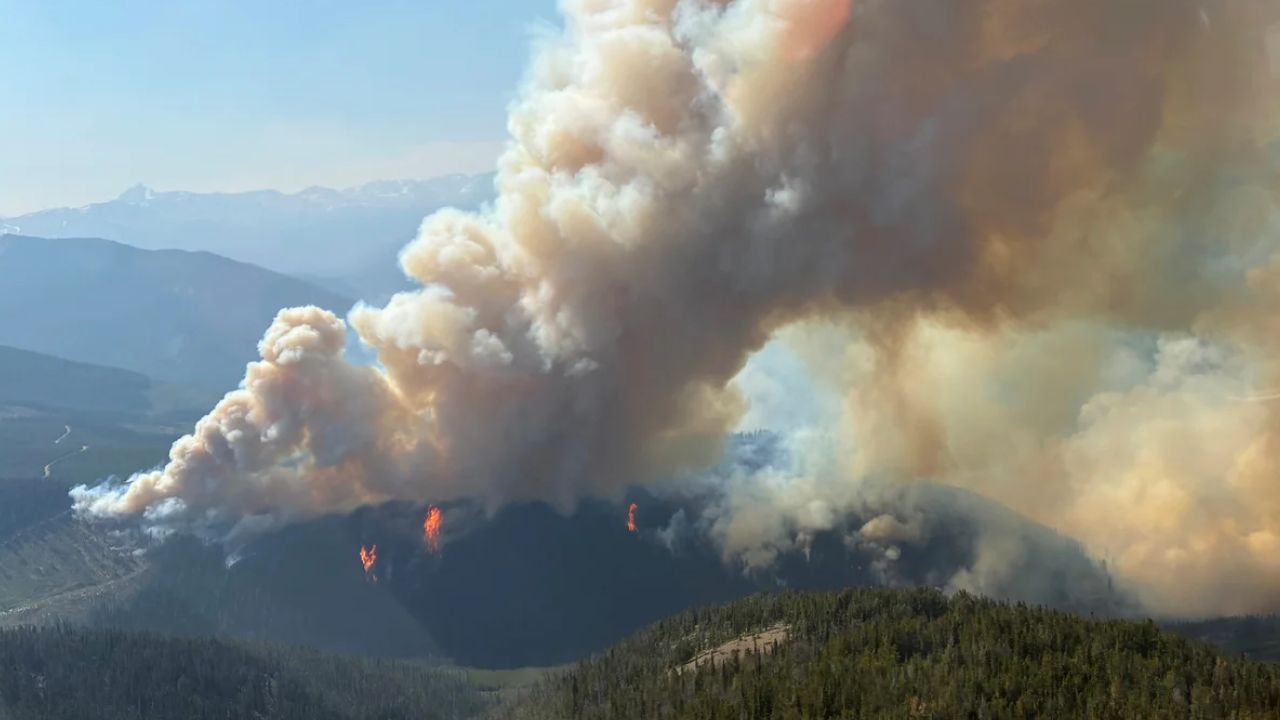
RENO, Nev. — A combination of relentless summer heat, prolonged dryness and limited rainfall is leaving large portions of the western and south-central United States increasingly vulnerable to fast-moving wildfires.
Across the region, months of sunshine and hot temperatures have dried vegetation and reduced soil moisture, creating conditions where even a small ignition can quickly turn into a dangerous blaze.
Recent fires in Utah, Oregon, Washington, Nevada and Texas demonstrate just how rapidly flames can spread when vegetation becomes tinder-dry.
The causes have varied, including suspected arson, human activity and lightning, but the underlying conditions have remained similar: extreme heat, dry fuels and limited moisture.
Nevada and Texas Fires Show How Quickly Flames Can Spread
The Hawk Fire northwest of Reno, Nevada, erupted over the weekend and rapidly burned more than 15,000 acres, according to InciWeb.
Officials determined that the fire was human-caused, although the exact circumstances remained under investigation.
Another major blaze, the Ross Fire west of Fort Worth, Texas, erupted Monday and expanded dramatically, reaching 50,000 acres by Tuesday morning. The fire was only 5% contained at that point, according to the Texas A&M Forest Service.
Weather conditions around the Texas fire were particularly dangerous.
Blazing sunshine, gusty winds, relative humidity below 25% and temperatures between 100 and 110°F combined to create an environment in which fire could spread quickly.
The cause of the Ross Fire remained under investigation.
Spokane Fires Highlight Destructive Potential
The wildfire danger has also been evident farther north.
In early August, several fires near Spokane, Washington, destroyed more than 800 buildings. Authorities have charged a man with deliberately setting multiple fires.
Spokane County officials estimate that the resulting damage could exceed $1 billion, illustrating the enormous human and economic consequences that can follow when fires move rapidly through dry vegetation.
Meanwhile, widespread drought stretching from the High Plains into the interior West has continued to make plants and grasses increasingly susceptible to ignition.
Texas Faces More Heat With Little Meaningful Rain
Some parts of north-central Texas received scattered showers Tuesday, but rainfall remained limited across much of the region.
Dallas had reached at least 40 consecutive days without measurable rain as of Tuesday, further highlighting the persistent dryness affecting the area.
Forecasters expect the combination of heat and limited thunderstorm activity to keep wildfire danger elevated across much of Texas and the interior West through the end of the week.
Temperatures are expected to reach the mid-90s to low 100s across broad areas, while some desert locations in Utah, Nevada, Arizona and California could climb into the 110s.
As daytime temperatures rise, humidity levels can fall sharply while winds increase, creating conditions where fires sparked by everyday activities can rapidly become dangerous.
Power equipment, discarded cigarettes and open flames can all provide ignition sources under such conditions.
Cooler Weather Could Arrive in the Northwest
A shift in the weather pattern could eventually bring some relief to parts of the Pacific Northwest.
Texas Weather Could Take a Turn This Fall: Here’s What NOAA’s 2026 Forecast Says About Heat and Rain
Meteorologists expect a dip in the jet stream late this week and into the weekend, bringing substantially cooler temperatures to Washington and western Oregon.
Some of that cooler air is also expected to reach northwestern Nevada’s Black Rock Desert, where the week-long Burning Man festival begins Sunday.
Temperatures there are forecast to become more manageable, reaching the 80s during much of next week.
However, cooler temperatures will not automatically eliminate the wildfire threat.
Smoke could remain a concern if fires develop in heavily vegetated areas, even if those fires are located hundreds of miles away.
Dry Thunderstorms Could Spark More Fires
The changing weather pattern could also bring more showers and thunderstorms to parts of the West next week.
But rainfall from storms is not guaranteed to be enough to reduce the fire threat.
Where thunderstorms produce little rain, wildfire danger could remain moderate to extreme. Dry thunderstorms may be particularly concerning because lightning can ignite vegetation while providing little rainfall to slow the flames.
That means the coming days could bring a complicated mix of extreme heat, changing temperatures, isolated storms and continued dryness.
For communities across drought-stricken areas of Texas and the West, the threat of rapidly spreading wildfires is likely to remain a major concern as summer heat continues.
How are heat and drought conditions affecting your area? Share what you’re seeing in the comments.
4 thoughts on “Dangerous Wildfire Conditions Spread Across Texas and the West as Heat, Drought and Dry Vegetation Take Hold”