
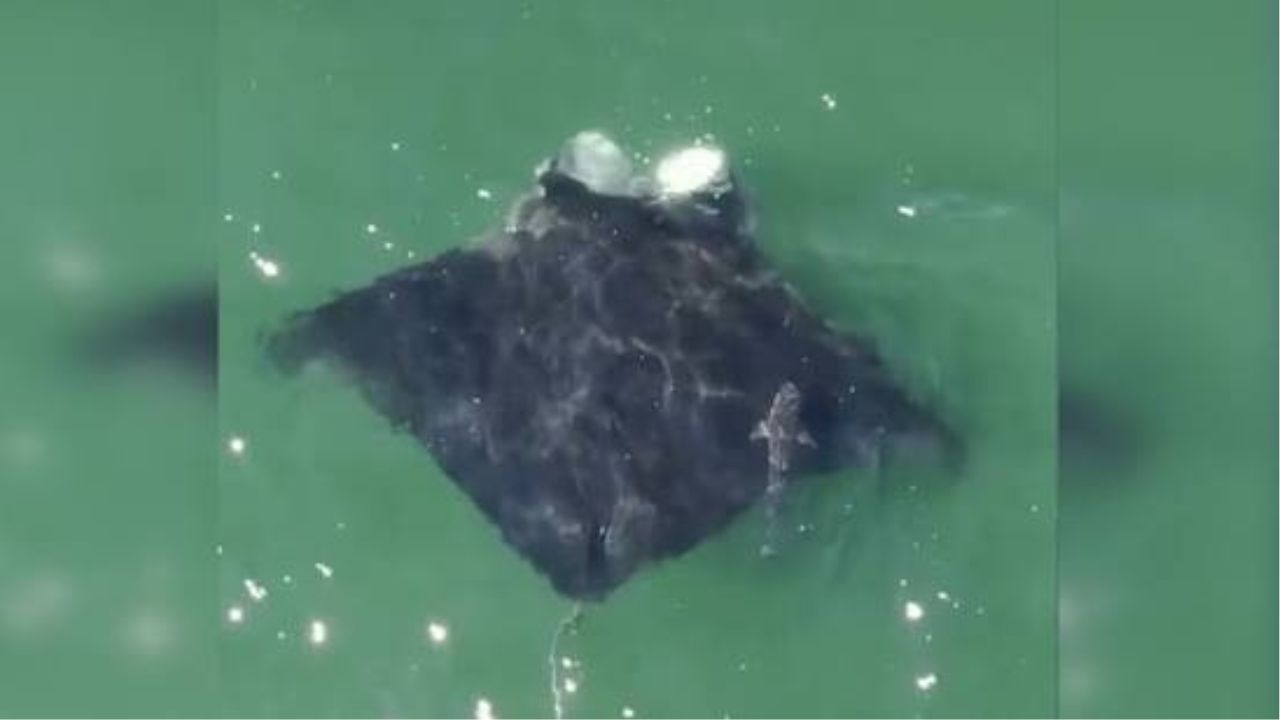
LONG ISLAND, N.Y. — An enormous marine visitor recently gave people along the Long Island coast a rare glimpse of one of the ocean’s most impressive creatures.
An oceanic manta ray was spotted feeding in waters near Jones Beach State Park last week, with video capturing the massive animal swimming through the coastal waters.
The sighting quickly attracted attention because oceanic manta rays are not commonly seen in New York waters. Their appearance along Long Island is considered unusual, although the species can occasionally venture into the region during warmer months.
The New York State Department of Environmental Conservation (DEC) highlighted the encounter in a Facebook post, describing it as an extraordinary sighting.
Oceanic Manta Rays Usually Prefer Warmer Waters
According to the DEC, oceanic manta rays typically make their homes in tropical and subtropical seas, where warmer conditions provide the environment they generally prefer.
That makes a sighting off New York’s coast particularly notable.
However, the DEC said these massive rays can sometimes be spotted in New York waters during the warm summer months.
The recent appearance near Jones Beach shows that coastal waters can occasionally attract marine species that are more commonly associated with warmer regions.
For those lucky enough to witness the ray, the encounter offered a rare opportunity to see one of the world’s largest rays in the wild.
What Does the Massive Manta Ray Eat?
Despite its intimidating appearance and enormous size, the oceanic manta ray is a filter feeder.
Manta rays use their enormous mouths to take in water and capture tiny organisms, including significant amounts of zooplankton.
Rather than hunting large prey, the animals filter food from the surrounding water as they swim.
The DEC also noted that manta rays can venture into deeper waters in search of medium-sized fish, showing that their feeding habits can extend beyond the shallow coastal environment where the Long Island ray was spotted.
The feeding behavior may also explain why the animal was seen moving through the waters near Jones Beach.
One of the Largest Rays in the World
The oceanic manta ray isn’t just large—it is the largest species of ray in the world.
According to the DEC, these animals can reach enormous proportions, with some weighing more than 4,000 pounds and living for up to 40 years.
Their size can make an encounter with one seem intimidating, particularly when the animal is swimming relatively close to shore.
Hurricane Lala’s Massive Rainfall Leaves Hawaii Facing Flooding, Damage and More Storms
But their enormous size should not be mistaken for aggression.
Are Manta Rays Dangerous to Humans?
Despite their massive bodies, oceanic manta rays are not considered a threat to humans.
Their feeding strategy is one reason encounters with swimmers and beachgoers are generally not viewed as dangerous. These animals are primarily interested in filtering food from the water rather than pursuing people.
The Long Island sighting therefore provided an unusual wildlife encounter rather than a cause for alarm.
For New Yorkers accustomed to seeing more familiar coastal species, the appearance of an oceanic manta ray near Jones Beach was a remarkable reminder of the variety of marine life that can pass through the state’s waters.
Although the animal’s appearance may have been unusual, the DEC’s explanation suggests that warm summer conditions can occasionally bring these tropical and subtropical visitors farther north.
Have you ever spotted an unusual marine animal along the New York coast? Share your experience in the comments.