
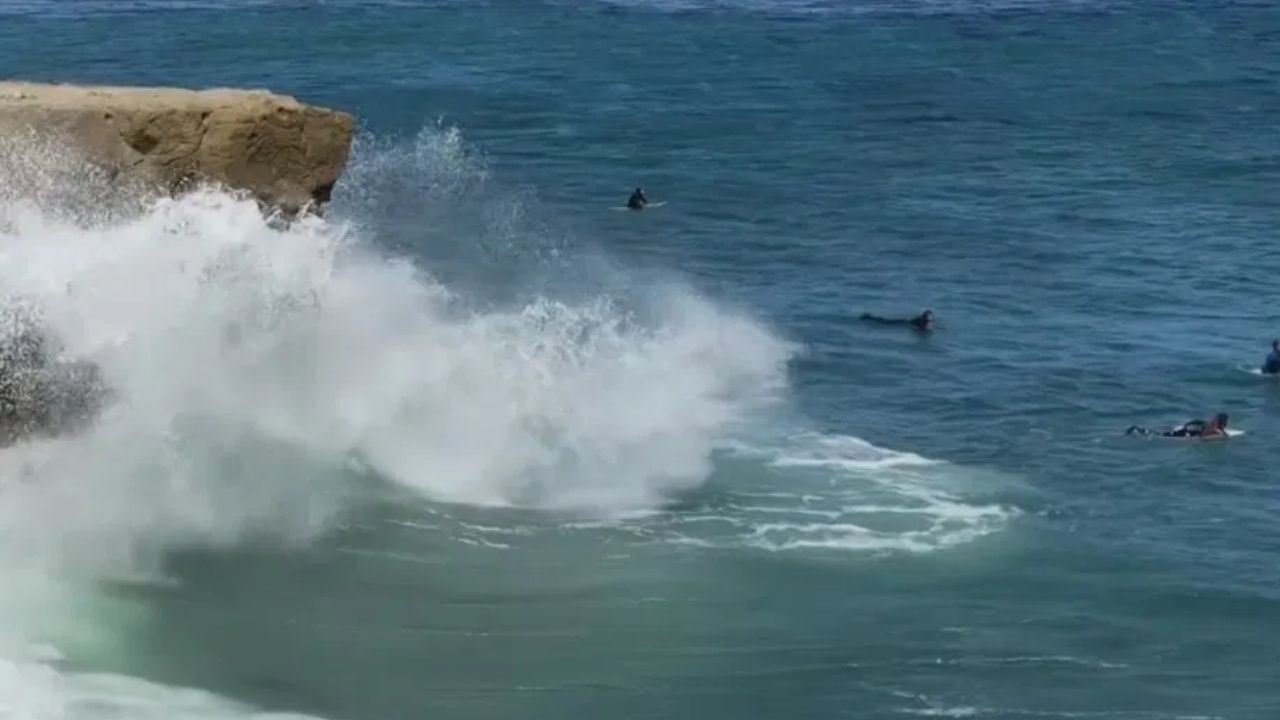
SAN FRANCISCO BAY AREA, Calif. — A huge ocean phenomenon is slowly making its way north along the North American coastline, and it could raise water levels around the Bay Area by nearly a foot in October.
But residents should not expect to see a massive wall of water suddenly crash onto the shoreline.
Instead, the phenomenon is a planetary-scale Kelvin wave, a slow-moving change in ocean conditions that can stretch thousands of miles and remain along the coast for weeks at a time.
The current wave is associated with El Niño, a climate pattern that can significantly influence ocean temperatures, winds and weather along the Pacific coast.
El Niño Sends Warmer Water Toward California
During an El Niño event, changes in winds can push warmer-than-normal ocean water toward the coast of Central America.
When that warmer water reaches the coastline, it can generate a coastally trapped wave, also known as a Kelvin wave, that travels northward along the West Coast toward Alaska.
The process is much different from an ordinary ocean swell.
The current wave is reportedly moving north along Central America’s coast at roughly 6 mph. It is expected to reach Baja within the next week or so, then move toward Southern California by late September or early October before arriving in the Bay Area during the first or second week of October.
The gradual movement means most people at the coast may not even realize the wave has arrived.
Multiple Kelvin Waves Could Hit California
One Kelvin wave may not be the only one California experiences this season.
These ocean waves can cause elevated sea levels for weeks, eventually fading before another wave develops and moves north.
During the strong 2015–2016 El Niño, California experienced an estimated five to six Kelvin waves. Some of those waves coincided with atmospheric rivers, creating extremely high waves along parts of the coast.
The results were dramatic.
In December 2015, Point Sur recorded a wave around 57 feet, while Point Reyes saw waves exceeding 55 feet. Mendocino recorded a wave approaching 64 feet, and Humboldt saw one around 60 feet.
Those events show why the combination of ocean conditions and storms can become especially important along California’s coastline.
October May Not Bring the Worst Impacts
Despite the expected rise in water levels, October is not necessarily when coastal communities face their greatest risk.
September and October typically feature some of the lowest tides of the year, meaning the incoming Kelvin wave is not expected to break water-level records when it reaches the Bay Area.
The situation becomes more concerning later in the year.
8-Year-Old Girl Scout Becomes Hero After Surviving Deadly Crash and Saving Another Child
California’s highest king tides generally occur between November and January, and this year’s highest tides are expected to coincide with major dates including Thanksgiving and Christmas.
If elevated ocean levels from Kelvin waves happen at the same time as king tides or a strong coastal storm, the impacts could become much more significant.
Coastal Erosion and Flooding Remain Biggest Concerns
The biggest concern is not a giant wave suddenly hitting the beach. Instead, officials and forecasters are watching for the potential combination of higher water levels, king tides and storms.
A well-timed combination could increase the risk of coastal flooding and erosion, particularly in vulnerable communities.
Forecast models are still uncertain about whether the Bay Area will experience an exceptionally wet winter, so a very rainy season is not guaranteed simply because El Niño is present.
However, higher waves and increased coastal erosion are among the more certain potential impacts.
For coastal communities, that means preparation could be more important than panic. October’s nearly foot-long rise in water levels may be noticeable in measurements but not dramatic at the beach. The more serious concern could arrive later, when naturally high tides and winter storms enter the picture.
Do you live near the Bay Area coast, and are you concerned about higher tides and coastal erosion this winter? Share your thoughts in the comments.