
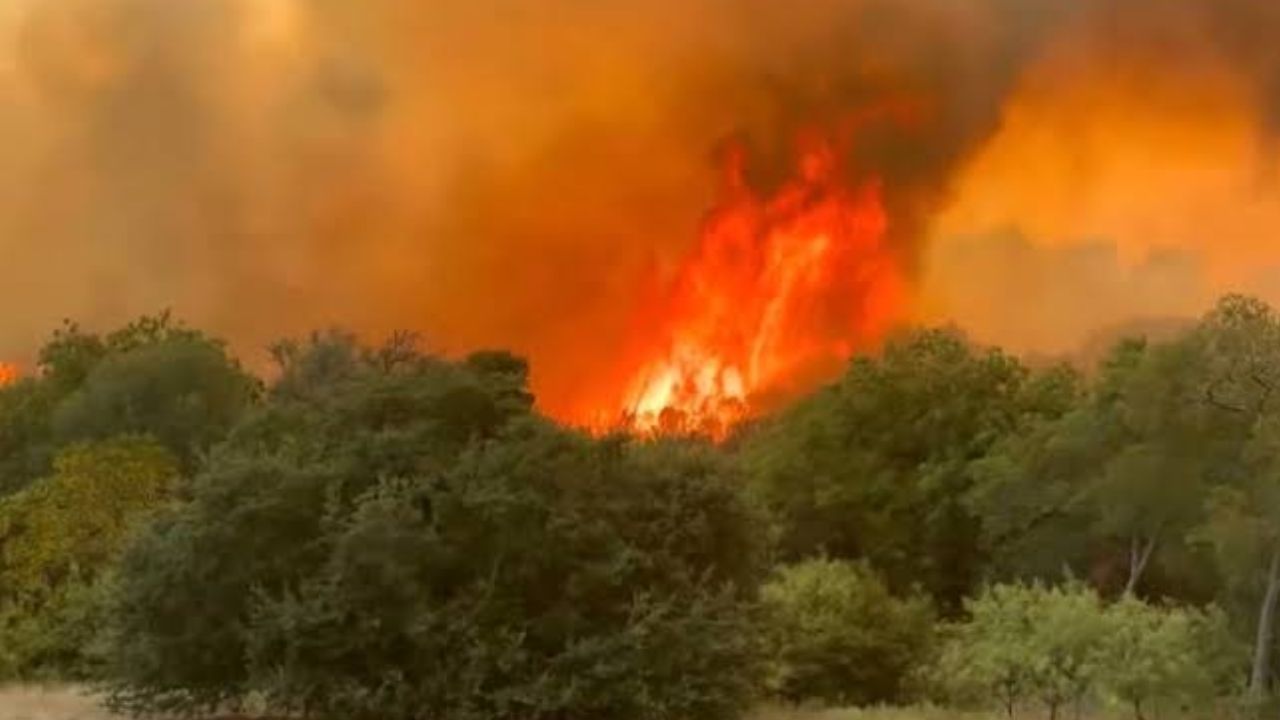
SOUTHEAST TEXAS — Residents across Southeast Texas are being warned about an increasing wildfire threat as firefighters continue battling the massive Ross Fire in Palo Pinto County.
The blaze has already consumed more than 50,000 acres and remained only 8% contained at the time of the report. Dry conditions have allowed the fire to grow rapidly, with more than 18,000 acres burning within just 12 hours.
While the Ross Fire is located farther north, officials say the weather and environmental conditions across Southeast Texas are creating concerns of their own.
With vegetation drying out and conditions becoming increasingly favorable for fire spread, officials are urging residents to take extra precautions and follow local burn restrictions.
Golden Triangle Sees Moderate Fire Threat
Fire danger levels are not the same across all of Southeast Texas.
The Golden Triangle is facing a moderate wildfire threat, meaning some fires can be expected and accidental ignitions can spread more quickly in dry vegetation.
The situation is more concerning in Newton and Jasper counties, where officials have issued a high wildfire threat for Wednesday.
Under a high threat classification, fires can start easily from a variety of causes and spread rapidly, making them harder for firefighters to control.
Officials say the current conditions are concerning because they resemble the environment that contributed to a series of wildfires across the region in 2023.
12News meteorologist Patrick Vaughn said the conditions Southeast Texas is experiencing now are similar to those seen during that previous period of widespread fire activity.
Burn Bans Aim to Prevent New Fires
With the wildfire risk increasing, several Southeast Texas counties have already issued burn bans.
Officials are emphasizing that the restrictions are designed to prevent human-caused fires before they become emergencies.
Even seemingly routine activities such as burning debris can become dangerous when vegetation is dry and weather conditions favor rapid fire spread.
Texas A&M Forest Service public information officer Ryan Burns said crews frequently respond to fires caused by debris burning.
“When we respond to a wild-fire it’s often to debris burning, and they will say, ‘I didn’t know there was a burn ban,'” Burns explained.
He said part of the agency’s role is making sure residents understand both the restrictions and the weather conditions that make them necessary.
“A part of our mission is to raise awareness for that, then have folks be aware of the weather we have been having,” Burns added.
What the Wildfire Threat Levels Mean
The Texas A&M Forest Service uses several fire danger categories to help residents understand how easily wildfires can develop and spread.
A low threat means fires are unlikely to start, and any fires that do ignite are generally expected to spread slowly and remain relatively easy to control.
A moderate threat means fires can start more easily, particularly from accidental sources such as sparks, burning debris or hot machinery. Dry grass and other vegetation can allow flames to spread more actively.
A high threat means wildfires are highly likely to occur. Fires can start easily and spread rapidly, particularly when dry vegetation and windy conditions are present.
The highest category, very high, means fires can start exceptionally easily and spread at a pace that can make suppression extremely difficult. Critically dry vegetation can allow even small fires to quickly become major incidents.
Hurricane Lala’s Massive Rainfall Leaves Hawaii Facing Flooding, Damage and More Storms
Burn Ban Violations Could Cost Up to $500
Officials are also reminding Southeast Texas residents that ignoring a county burn ban can have legal consequences.
Violating a county burn ban is classified as a Class C misdemeanor under Section 352.081, subsection G, of the Texas Local Government Code.
Anyone convicted of violating the restriction could face a fine of up to $500, along with community service.
As firefighters continue working to contain the Ross Fire, Southeast Texas officials are hoping residents will take the warnings seriously and avoid activities that could accidentally spark another wildfire.
For communities already dealing with dry conditions, a single spark can quickly turn into a dangerous fire.
Residents should check their local restrictions before burning anything and remain aware of changing fire danger conditions.
Are wildfire conditions getting worse where you live? Let us know in the comments and share this story with others in your community.
2 thoughts on “Southeast Texas Wildfire Threat Rises as Massive Ross Fire Burns More Than 50,000 Acres and Conditions Turn Dangerous”