
United States — The Atlantic hurricane season is entering one of its most important periods of the year, but the tropics remain unusually quiet as the climatological peak approaches.
The official climatological peak of the Atlantic hurricane season occurs on September 10, a date when tropical activity typically reaches its highest point. Yet so far in 2026, the Atlantic has produced five named storms and zero hurricanes.
That unusually slow pace has put the season on the verge of entering record territory.
While much of the Atlantic remains suppressed by unfavorable atmospheric conditions, forecasters are closely watching waters near the southeastern United States for signs that the pattern could begin to change.
Southeast U.S. Waters Become Area to Watch
Forecasters have identified an area offshore of the southeastern United States where tropical development could become possible into the middle of September.
A slow-moving front is expected to move into the Southeast, increasing thunderstorm activity across the region. Meteorologists say an area of tropical development could potentially take shape offshore in a setup similar to the conditions that helped Edouard form the previous week.
At this point, the chance of tropical development remains low.
However, experts say the area deserves monitoring because of the combination of thunderstorms and warmer-than-average water temperatures across large portions of the Gulf of Mexico and Atlantic Ocean.
Even without a named tropical system developing, thunderstorms could still create hazards.
Residents and visitors along the coast should be aware that heavy downpours, localized flooding and gusty winds may accompany stronger thunderstorms. Beachgoers and boaters could be particularly vulnerable to rapidly changing conditions.
Next Storm on the 2026 List Is Fay
If another named storm develops in the Atlantic, the next name on the 2026 hurricane season list is Fay.
The naming system is used once tropical systems reach the required strength to become named storms. So far, five storms have reached that threshold, but none have developed into hurricanes.
Powerful Hurricane Lowell to Swipe Western Hawaiian Islands as Flood and Wind Threats Rise
That unusual gap between named storms and hurricanes is one reason forecasters are paying close attention as the season moves into its historically busiest period.
The next several days could provide a clearer indication of whether tropical activity will begin to increase or whether the quiet pattern will continue.
2026 Season Could Break a Hurricane Record
The Atlantic season is approaching a notable record.
During the satellite era, which began in the 1960s when the United States began monitoring weather from space, the latest date for the first Atlantic hurricane is September 11.
That record occurred in both 2002 and 2013.
If no hurricane forms by Friday, the 2026 season would reach the latest point in the satellite era without producing an Atlantic hurricane.
The last Atlantic hurricane season with no hurricanes at all occurred in 1914, more than a century ago.
While the current season is not yet close to being classified that way, continued inactivity through September would make the 2026 season increasingly unusual.
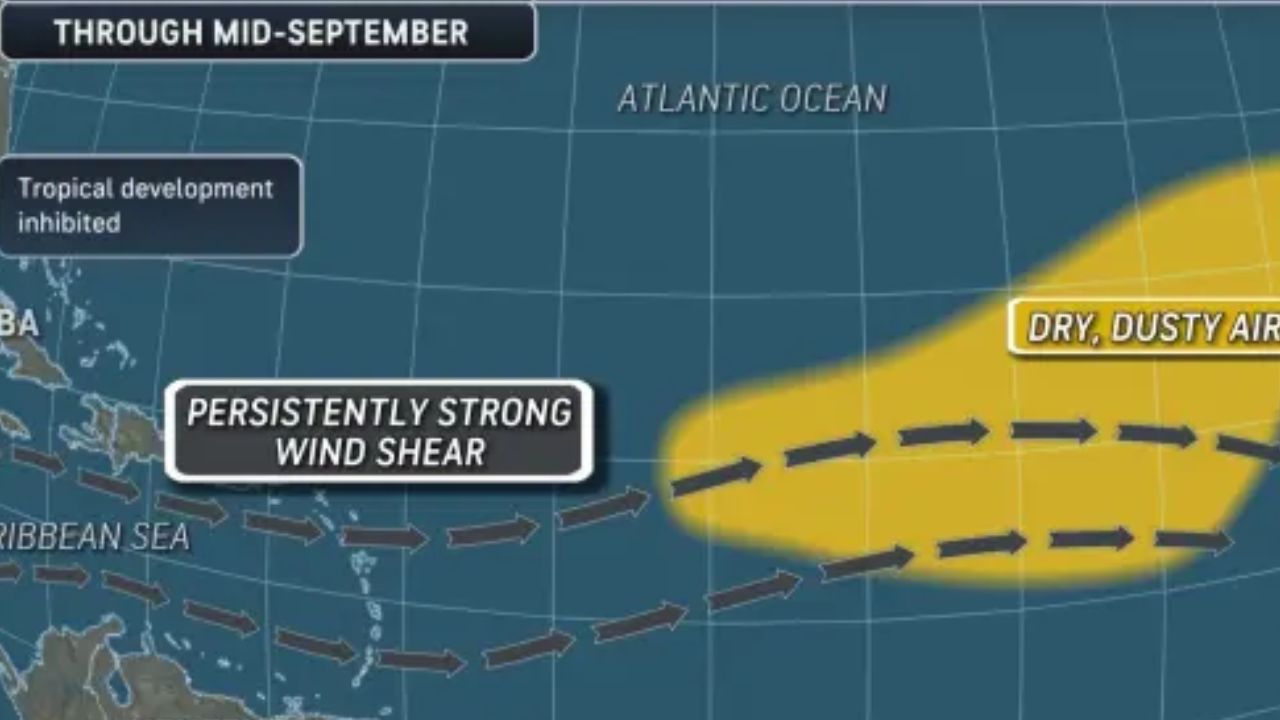
Wind Shear and Saharan Dust Suppress Storm Development
Several atmospheric factors have helped keep the Atlantic unusually quiet.
One of the biggest obstacles has been strong wind shear, which can disrupt developing tropical systems by separating the storm’s circulation from its thunderstorms.
Saharan dust has also played a role.
Multiple plumes of dust have traveled westward across the Atlantic, bringing dry air that can inhibit tropical development and make it harder for thunderstorms to organize into tropical systems.
These conditions are expected to remain unfavorable for development through at least the middle of September, according to the forecast outlook provided.
Warm Waters Keep Forecasters Watching
Despite the quiet season, experts are not dismissing the possibility of tropical threats.
Large sections of the Gulf and Atlantic remain warmer than historical averages, providing a potentially favorable source of energy if atmospheric conditions become more supportive.
That means the lack of hurricanes so far should not be interpreted as a guarantee of a quiet remainder of the season.
For now, forecasters are watching the southeastern U.S. coastline and offshore waters while tracking changes in thunderstorms, wind shear and moisture.
The Atlantic may be unusually quiet, but with the seasonal peak arriving and warm waters in place, the potential for activity remains on the radar.
Do you think the unusually quiet 2026 Atlantic hurricane season will continue, or could the tropics suddenly become more active? Share your thoughts in the comments.