
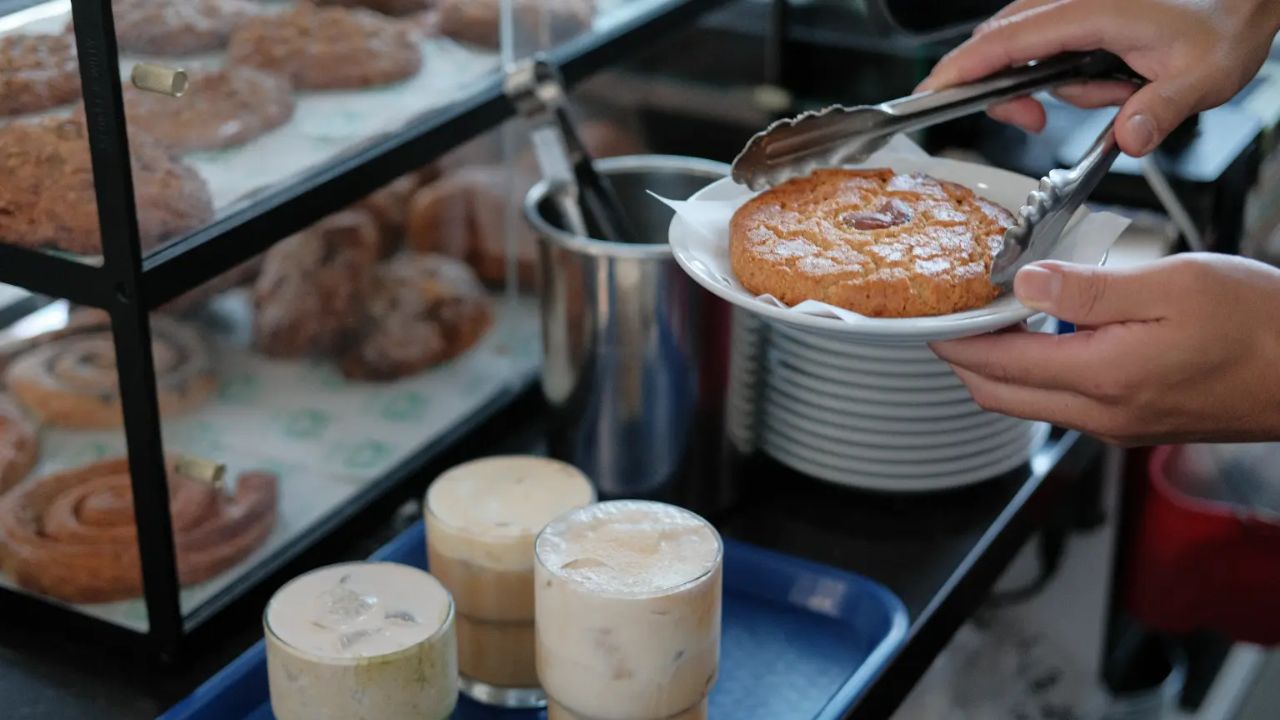
LOS ANGELES, Calif. — A Korean convenience store trend that has been taking over social media is now making its way into Los Angeles, giving Angelenos a chance to experience one of Korea’s most recognizable everyday food cultures without leaving the city.
Videos showing people eating and exploring Korean convenience stores have been racking up millions of views on YouTube, with shoppers turning visits into something of a treasure hunt as unusual snacks, drinks and products constantly appear on shelves.
Now, that viral experience has landed in Highland Park with the opening of Mokja, a new concept designed to bring the spirit of Korean convenience stores to Los Angeles.
But Mokja is more than a traditional convenience store.
It combines a cafe, restaurant, market and neighborhood gathering space under one roof, offering customers a place to grab a quick bite, sit with friends or discover Korean-inspired snacks and drinks.
Mokja Brings the Korean Convenience Store Experience to LA
The concept was created by Korean chef Debbie Lee, who reached the top three during season five of The Next Food Network Star, along with Frank and Michelle Law, the founders of Be Bright Coffee.
For Lee, the appeal of Korean convenience stores goes far beyond simply grabbing food.
She described them as comforting and welcoming places where people can stop at almost any hour of the day.
“It’s open 24-7,” Lee said. “It’s a place you can go after work if you’re tired, if in the middle of the night you’re hungry for a bowl of noodles, or if maybe you’re heartbroken and want to meet your friends over there for a little beer and some snacks. It’s a place for everyone to congregate.”
That sense of accessibility is a major part of the concept.
Korean convenience stores can serve people looking for an inexpensive snack just as easily as someone searching for a quick meal or a place to meet friends.
Affordable Korean-Inspired Food Gets an Upgrade
At Mokja, however, the food goes considerably beyond what customers might expect from an ordinary convenience store.
Lee is known for her modern Korean gastropub-style cooking, and that influence can be seen throughout the menu. The dishes take familiar convenience-store flavors and give them a more sophisticated twist while keeping prices relatively approachable.
Among the standout options are the $11 egg sando, the $14 PBL&T, featuring pork belly, lettuce and tomato, and the $9 oxtail hand pie.
There is also a $5 spam musabi and a $5 jollypong cookie inspired by the popular Korean Jollypong cereal.
The menu gives visitors an opportunity to sample familiar Korean flavors in a format that feels casual and approachable.
DIY Ramen and Creative Korean Drinks
One of Mokja’s biggest nods to Korean convenience-store culture is its DIY ramen bar.
Making ramen at convenience stores is a familiar experience in Korea, and Mokja allows customers to recreate that tradition while enjoying the restaurant’s Highland Park setting.
The drink menu also puts a creative spin on Korean flavors.
Mokja’s specialty lattes cost $8 each and include inventive combinations inspired by Korean ingredients and beverages. One standout is the misugaru latte, which brings the nutty, grain-based Korean flavor into a specialty coffee drink.
Frank Law, co-founder of Be Bright Coffee, brings significant coffee credentials to the concept. He was named the 2024 U.S. Barista Champion, and Lee said he has put his own interpretation on some of Korea’s most iconic drinks.
Korean Convenience Stores Continue Growing Globally
The rise of Mokja comes as Korean pop culture continues to influence food and lifestyle trends around the world.
Much like K-pop and K-dramas, Korean convenience stores are increasingly attracting international attention, with the concept spreading to countries including Malaysia, Mongolia and the United States.
Korean convenience store chain CU has also opened three locations in Hawaii, giving American customers another opportunity to experience the country’s convenience-store culture.
For now, Los Angeles residents can get their introduction to the trend at Mokja in Highland Park.
With its combination of affordable Korean-inspired food, specialty coffee, DIY ramen and a casual community atmosphere, the new spot is offering Angelenos something that feels both familiar and distinctly Korean.
Would you try Mokja’s Korean convenience-store experience in Highland Park? Tell us which menu item you would want to try first in the comments.